
4 Seater vs. 6 Seater Golf Carts — Which Should You Buy in 2026?
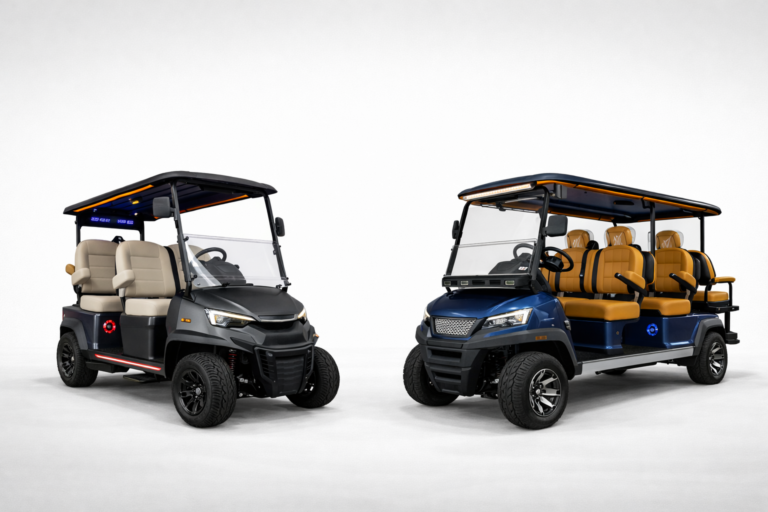
Here’s a decision that seems simple until you’re actually standing in a dealership trying to make it. Four seats feels right for most families — but what about when the neighbors want to come? What about the grandkids? What about the cooler?
The good news is this decision comes down to a handful of concrete factors — size, cost, weight, and how you actually plan to use it. Here’s everything you need to know before you choose.
The Numbers First — What Each Configuration Actually Costs
Let’s start with price, because it sets the stage for everything else. Four-seater family models generally run $8,000 to $10,000 new, while six-passenger models start around $10,000 and can reach $17,000 or more depending on features and brand. Marketkeep
That’s a meaningful gap — but as you’ll see, the per-seat math tells a more nuanced story. You’re getting 50% more seating for roughly 20 to 30% more money when you step up from a four-seater to a six-seater. Wickedly Awesome
For buyers who genuinely need that extra capacity on a regular basis, that’s a reasonable value proposition.
Size and Dimensions — This Matters More Than Most Buyers Realize
One of the most overlooked parts of the four vs. six seater decision is what happens when you try to park it.
A four-seater golf cart typically measures between 274 and 305 centimeters in length. A six-seater stretches to between 143 and 160 inches — that’s the difference between a compact car and a full-size SUV in terms of the parking real estate it requires. Fast Hippo Media
A typical six-seater runs around 11.5 feet long, 4 feet wide, and 5.5 feet tall — still under the length of a small car, which usually comes in just under 14 feet. Golfcartlifestyles
It’ll fit in most standard garages, but measure before you buy. The difference between a compact six-seater at 11.2 feet and a longer model at 13.5 feet is over two feet — that gap can mean the difference between fitting in your garage and parking outside. Fast Hippo Media
Width stays fairly consistent across both configurations at around 48 inches. Length is what grows significantly with every row of seats added — and that affects everything from where you can park to how the cart handles on narrow neighborhood paths and tight turns. Fast Hippo Media
Weight — A Practical Consideration for Performance and Transport
More seats means more cart — and the weight difference has real practical implications. A four-seater electric golf cart typically weighs between 1,200 and 1,500 pounds. Most six-seater golf carts weigh between 1,100 and 1,400 pounds Oreate AI — though heavier six-seater configurations with larger battery packs can push well beyond that. A four-seater cart typically weighs less, allowing for better energy efficiency and longer range per charge. This is particularly beneficial if you intend to use the cart for regular short-distance travel. FeedSpot
If daily neighborhood cruising is your primary use, the lighter four-seater will get more miles out of each charge. For towing and transport: most six-seater golf carts require a 14-foot trailer for safe transport — in many cases a 12-foot trailer might work, but it can be a tight fit depending on the cart’s size and seat configuration. WebFX
The Case for a Four-Seater
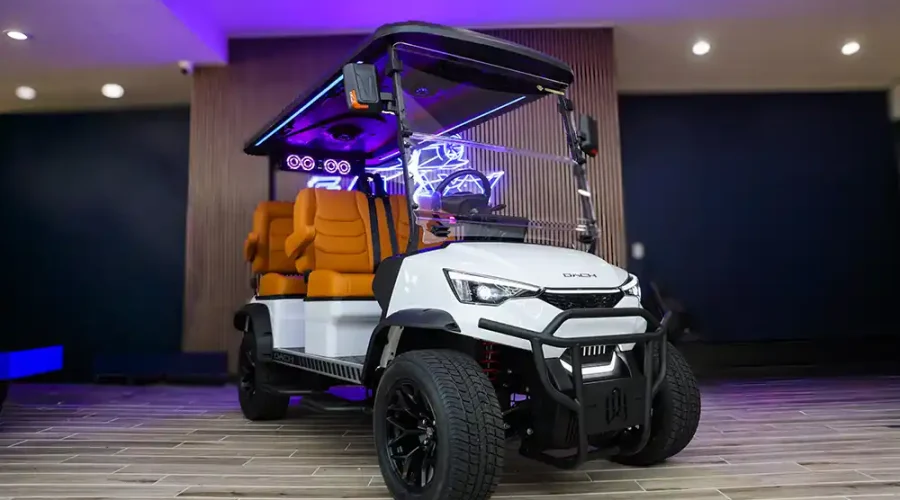
For the majority of families in North Texas, a four-seater is the right call — and the numbers back it up. Based on analysis of 2,288 dealer listings gathered in early 2026, four-seaters account for 48% of all golf carts on the market, compared to just 4% for six-seaters. Wickedly Awesome
The market has spoken pretty clearly on what most buyers actually need. The four-seater’s compact size makes it easier to park, especially in tight driveways or garages. Compared to larger models, it’s more affordable in terms of initial cost, energy use, and upkeep — and because of their smaller size and quiet operation, four-seaters are often the go-to option for gated community residents. Fast Hippo Media
One important configuration detail for families: many four-seaters use a rear flip seat that faces backward. Newer models offer all forward-facing seats, which are safer and more comfortable — especially for families with children. Wickedly Awesome If kids are riding regularly, make sure you understand which configuration you’re getting.
The Case for a Six-Seater
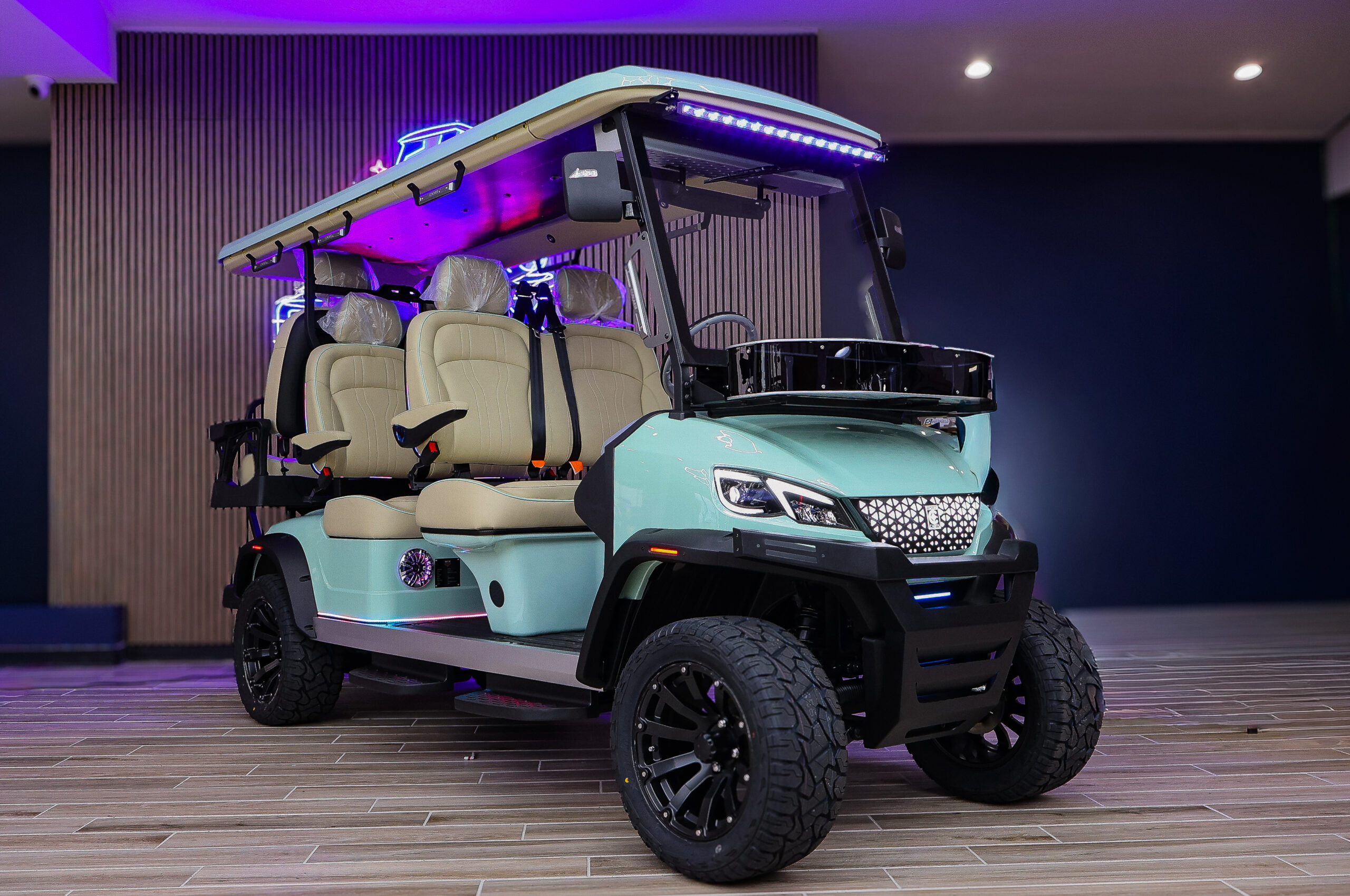
There are specific situations where a six-seater is clearly the right answer — and if those situations describe your life, don’t talk yourself out of it. If you regularly travel with five or more people, the six-seater ensures everyone rides together comfortably. For larger families, vacation homes, or anywhere you need to transport a crowd, the six-seater eliminates the problem of leaving someone behind or making two trips. Fast Hippo Media
Whether you’re moving guests between locations or using the cart for group outings, the six-seater design allows for fewer trips, saving time and improving efficiency. Many six-seater models also include upgraded seating, safety features, and spacious legroom. FeedSpot
There’s also a practical buying logic worth considering: the general rule is to buy one size up from what you think you need. The premium for an extra row of seats is small compared to the cost of upgrading later — a four-seater buyer who later wants six seats has to sell and buy again, while someone who bought the six-seater upfront saved the hassle and transaction costs. Wickedly Awesome
Performance — Does the Extra Size Affect the Ride?
In everyday neighborhood use, the performance difference between a four and six-seater is modest. But there are a couple of nuances worth knowing. Gas carts handle extra weight better than electric carts because the engine adjusts to load dynamically. If you’ll frequently carry a full six-seater load on hilly terrain, gas models have a slight edge. Wickedly Awesome
For flat North Texas neighborhoods, this distinction rarely matters in practice. On the electric side, six-seater models compensate for the added size with larger battery and motor configurations. Six-seater carts are typically powered by 48V or 72V battery systems, giving them plenty of power to move a full load comfortably. Golfcartlifestyles
The Simple Decision Guide
If you’re still on the fence, here’s the cleanest way to think through it: If you prioritize maneuverability, affordability, and compact storage — and your typical group is four people or fewer — the four-seater is hard to beat. If you’re regularly transporting more people, entertaining frequently, or managing a larger property where capacity matters, the six-seater delivers more value and convenience without sacrificing too much in size or cost. Fast Hippo Media
Still not sure? Think about the last five times you would have used a golf cart. How many people were with you? That number is probably your answer.
The Bottom Line
Both configurations are solid choices in 2026 — modern electric systems, lithium batteries, and premium features are available across both. The decision really comes down to your household size, your garage dimensions, and how you picture a typical ride.
The team at Galaxy Golf Cars in Plano carries multiple seating configurations and can walk you through the exact dimensions, features, and pricing on both before you commit. If you’ve been going back and forth on this one, an in-person comparison is the fastest way to make it click.