
Electric vs. Gas Golf Carts — Which is Right for You in 2026? (Honest Comparison)
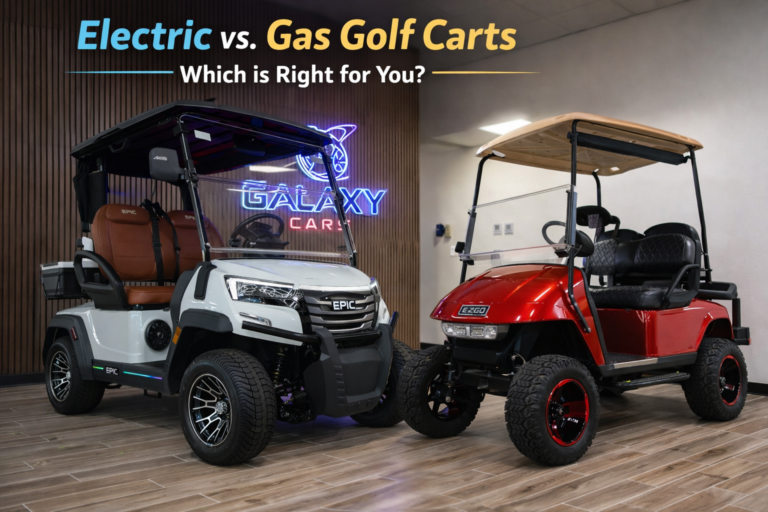
If you’re shopping for a golf cart in 2026, there’s a decent chance you’ve already asked someone whether you should go gas or electric — and gotten a different answer from everyone you talked to. So let’s cut through the noise.
The honest truth is that for the vast majority of buyers in North Texas — neighborhood cruising, HOA communities, golf courses, daily errands — electric wins. Not because gas carts are bad, but because the data on cost, convenience, and where the industry is headed all point in one direction. Here’s the full breakdown.
The Market Has Already Decided
This isn’t just opinion. The numbers back it up.
Electric golf carts are on track to capture a massive 95.3% of the market share, largely driven by their quiet, eco-friendly operation and lower running costs. WebFX That’s not a trend — that’s a near-total shift. Manufacturers, dealers, and buyers across the country are moving almost exclusively toward electric, and for good reason.
The global golf cart market was valued at around USD 2.30 billion in 2025 and continues to expand. WebFX The growth is being driven by electric — not gas
Cost to Buy — Closer Than You Think
One of the most common myths about electric carts is that they cost significantly more upfront. In most cases, the gap is smaller than people expect.
For basic carts, prices range from $4,000 to $8,000. Mid-range carts run $8,000 to $12,000. Luxury models start at $12,000 and can exceed $20,000 with customizations. FeedSpot Those ranges apply to both gas and electric — and in many cases, comparable models are priced similarly across both powertrains.
By virtually every measure, electric golf carts are cheaper. The purchase price is usually lower. The maintenance is minimal. And of course, there’s no need to fill up with gas. Divot Collective.
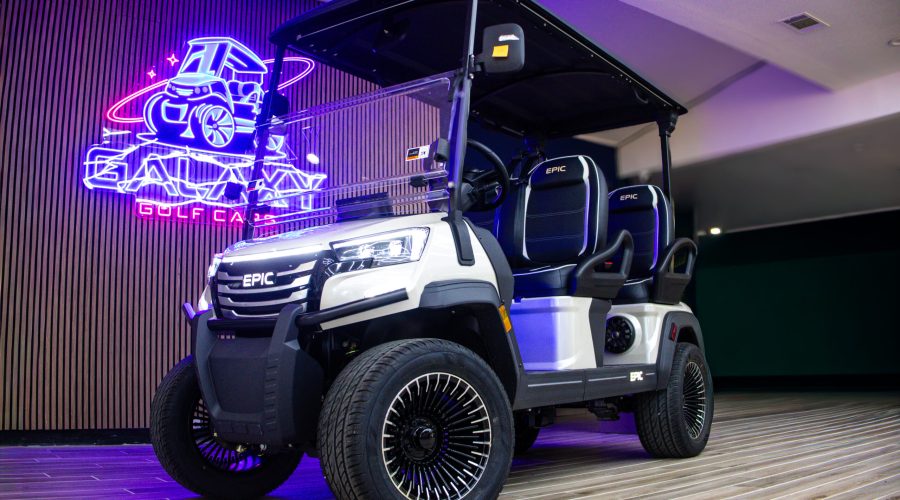
Cost to Run — Electric Wins Decisively
This is where the gap between gas and electric becomes impossible to ignore.
A full charge on a 48V electric system runs about $0.50 to $1.00 in electricity, delivering 25 to 40 miles of range. Over a year of regular use, you’re looking at roughly $50 to $100 in electricity costs versus several hundred dollars in gas for equivalent use. Wickedly Awesome
Gas carts, by comparison, carry ongoing fuel costs that compound over time — especially with fuel prices as unpredictable as they’ve been. A gas cart’s long-term costs are like a slow, steady burn — a constant trickle of fuel expenses and regular engine maintenance that add up significantly over years of ownership. WebFX
Maintenance — Not Even Close
Gas carts need oil changes every 100 to 150 hours of operation or annually, plus air filters, spark plugs, fuel filters, belts, clutches, and carburetor attention. Expect to spend $150 to $300 annually on gas cart maintenance even if you’re doing some of the work yourself. Wickedly Awesome
Electric carts require dramatically less. Typically an electric golf cart needs only general cleaning and upkeep. You will eventually need a new battery, but not for some time — a well-maintained electric golf cart battery can last up to 10 years. Divot Collective
Electrics require less maintenance, have fewer moving parts, and have far lower running costs over the long term. They only require a standard 15-amp, 120-volt power connection — there’s no need to store gasoline or deal with fire code considerations. Oreate AI
The one significant cost electric owners face is eventual battery replacement. A standard lead-acid battery pack lasts three to five years and costs $800 to $1,500 to replace. A modern lithium battery lasts eight to ten years, with replacement costs of $2,000 or more — but with virtually zero maintenance required between replacements. WebFX
Even factoring that in, replacing a battery every five to eight years is simply cheaper than the cumulative parts and maintenance costs a gas cart accumulates over the same period. Marketkeep

Performance — Electric Has the Edge on the Streets
The main performance benefit of an electric cart is similar to that of an electric car — power and torque are available almost instantly, which leads to quick, responsive acceleration. For short distances, this is ideal for getting up and going quickly. Agency Replacement
Electric engines produce power with every rotation, while gas engines produce power every other rotation — which is why electric carts feel smoother and more responsive from a stop. Marketkeep
Gas carts do have one traditional advantage — range. A standard 48V electric cart travels 25 to 40 miles on a full charge, while a gas cart with a four-to-six-gallon tank can average 100 to 120 miles. FeedSpot For most neighborhood and golf course use, 25 to 40 miles per charge is more than sufficient — but if you’re managing a large property and don’t have easy access to charging, gas range is worth considering.
Noise, Emissions, and Where You Can Actually Use It
This one is straightforward. Electric carts operate nearly silently, produce zero direct emissions, are accepted everywhere including golf courses, residential neighborhoods, and indoor use — and are universally welcome where gas carts may be restricted or banned. Wickedly Awesome
Many golf courses don’t allow gas carts. Some neighborhoods prohibit them. Regulations are trending toward electric. Wickedly Awesome Buying gas in 2026 means swimming against a current that’s only getting stronger. Electric golf carts have zero emissions, run more smoothly and quietly — even near-silently — and produce no exhaust smell. Divot Collective For neighbors, HOAs, and early morning rides through the community, that matters more than most people realize until they own one.
Charging — Simpler Than It Sounds
One concern buyers sometimes raise about electric is the charging process. In practice, it’s one of the biggest advantages.
Charging an electric cart at home means plugging in overnight and waking up to a full battery — no trips to the gas station, no fuel storage, no fumes. Wickedly Awesome For daily neighborhood use, most owners never think about range anxiety at all. You plug it in when you get home the same way you’d charge a phone.
The Honest Case for Gas
In the interest of giving you the full picture: gas carts do make sense in specific situations. If you’re managing a very large rural property, need extended range without access to charging, or are hauling heavy loads over rough terrain for hours at a time — gas has historically held an edge in raw endurance.
Gas carts have more power with their internal combustion engines, and with proper maintenance, gas-powered carts can run for decades — which contributes to their traditionally higher resale value on the used market. Fast Hippo Media
But for the overwhelming majority of buyers in North Texas — neighborhood use, golf courses, daily errands, family cruising — those advantages simply don’t apply.
The Bottom Line
In 2026, the electric vs. gas debate is largely settled for most buyers. Lower operating costs, minimal maintenance, near-silent operation, zero emissions, and universal access make electric the smarter choice for everyday life in a DFW neighborhood or community.
That’s why Galaxy Golf Cars carries an all-electric lineup — not because gas carts don’t exist, but because after years of putting carts in North Texas driveways, the team there knows what works best for the people they serve. If you want to see what today’s electric carts actually look and feel like in person, their showroom on North Central Expressway in Plano is worth the visit.