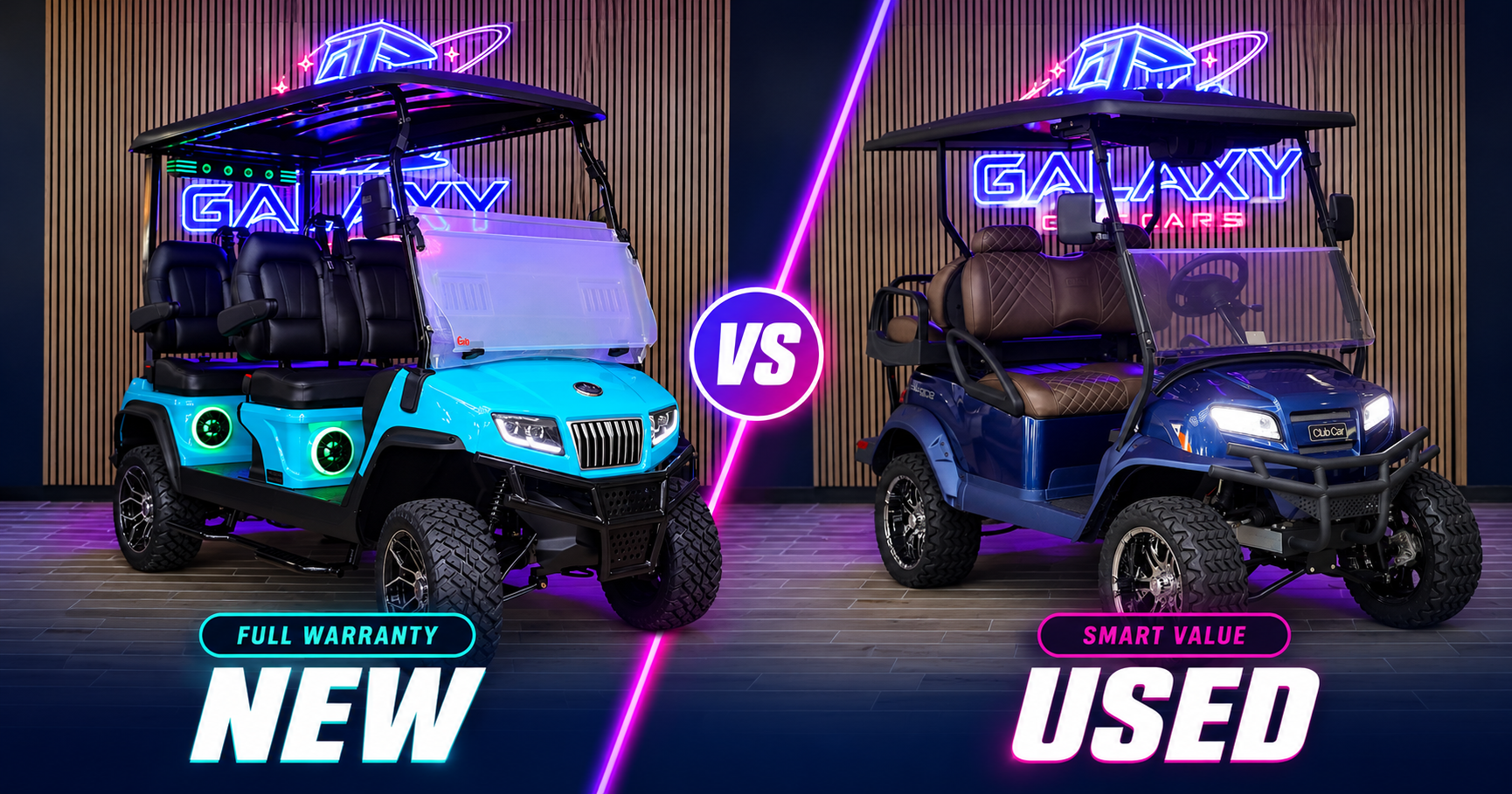
New vs. Used Golf Carts — What’s Actually Worth Your Money in 2026
This is one of the most common questions we hear from first-time buyers: should I buy new or used? It feels like a simple question, but the honest answer is — it depends. And the factors that should drive your decision are pretty specific.
Here’s a clear-eyed breakdown of both sides, with real numbers and no spin.
What You’re Actually Paying — The Price Reality in 2026
Let’s start with what things actually cost right now.
New golf carts range from $5,000 to $15,000 depending on the brand, model, and features. Basic 2-seater electric carts start around $5,000, while premium or luxury models can exceed $15,000. Used golf carts range from $2,000 to $5,000 for older or basic models, with quality used carts typically landing between $5,000 and $7,000.
That means the sticker price is only part of the story. What you pay after you drive it home matters just as much.
The Case for Buying New
Buying new isn’t just about getting something shiny. There are practical reasons it makes sense for certain buyers.
- You get a real warranty. New golf carts typically include manufacturer warranties that cover major components and help reduce early repair costs. That peace of mind has real dollar value — especially in the first few years when unexpected repair costs hurt the most.
- You get to customize from scratch. Buying new allows you to select seating, colors, accessories, and features before the cart ever leaves the dealership. If you have a specific vision for your cart — a particular color, seat style, or tech setup — new is the only way to get exactly what you want.
- Lithium batteries are increasingly standard. In 2026, lithium battery systems are becoming more popular because they charge faster, last longer, and require less maintenance than traditional lead-acid batteries. Buying new means you’re likely getting a lithium system from the start — which matters a lot for long-term value.
- Depreciation is real but slows quickly. Golf carts depreciate steepest in years one and two at 20–25% annually, then moderate to 10–15% per year through year five, then slow to 5–10% per year after that. If you plan to keep your cart for five years or more, the initial depreciation hit becomes far less significant over time.
The Case for Buying Used
Used carts make a lot of sense in the right circumstances — but you have to be strategic about it.
- The value sweet spot is years three to five. A three-year-old cart often costs 40% less than new while retaining most modern features and reliability. That’s a significant savings for something that still has the majority of its useful life ahead of it.
- Well-maintained carts hold their value. A used golf cart in good condition is typically worth 40–70% of its original MSRP, depending on age, brand, and power type. That also means if you buy smart and take care of it, you can resell without taking a catastrophic loss.
- But battery condition is everything. Battery health is the single biggest variable in used electric cart pricing. A cart with strong batteries that hold a full charge is worth $800–$1,500 more than one with weak or dead batteries. Before you buy any used electric cart, get a straight answer on the battery age and condition. If those batteries are nearing the end of their life, factor that replacement cost into what you’re willing to pay.
Keep this number in mind: electric cart batteries require replacement every four to six years and cost $800–$2,000 to replace. A cart priced attractively might not look so attractive once you add that into the equation.
Brand Matters — Especially on the Used Market
Not all used carts are created equal, and the brand you buy significantly affects both reliability and resale value.
A three-year-old Club Car retains 70–80% of its original price, and at the five-year mark, expect 60–70% — the reason being aluminum frames that don’t rust and a widespread service network. Club Car, Yamaha, and E-Z-GO sell for more used because buyers trust them. They’re easy to service, parts are everywhere, and dealers actually want them as trade-ins.
Lesser-known brands may save 20–30% initially but can lack parts availability and service support long-term. That savings can evaporate quickly if you’re waiting on a hard-to-find part or paying a premium for specialty service. It’s one more reason where you buy matters: a dealer that services what it sells — with parts, techs and mobile service behind it — takes that risk off the table.
Lithium vs. Lead-Acid — A Bigger Factor Than Most People Realize
Whether you’re buying new or used, the battery technology in the cart deserves serious attention.
Lithium-ion carts sell for about 15% more than lead-acid on the used market. Lithium batteries last 8–10 or more years and require zero maintenance, while lead-acid packs last four to six years and cost $800–$1,500 to replace. Buyers factor that upcoming cost into their offers.
If you’re planning to keep your cart for a few more years before selling, a lithium conversion is one of the few upgrades that pays for itself at resale. A quality 48V lithium battery runs $1,500–$2,500 installed.
The bottom line: a used cart with a fresh lithium battery is often a better value than a used cart with aging lead-acid batteries — even if the sticker price on the lead-acid cart is lower.
Winter Is the Best Time to Buy Either
❄️ Here’s a practical tip worth knowing regardless of which direction you go: winter months offer 15–20% savings on both new and used models. Demand drops in the colder months, and dealers are more motivated to move inventory. If your timeline is flexible, buying in late fall or winter can save you real money.
So Which Is Actually Worth It?
Here’s the honest answer: if you plan to use the cart regularly, want it to look exactly how you want, and are buying from a quality brand — new is worth the premium. The warranty, the lithium battery, and the customization options justify the extra cost over five-plus years of use.
If you’re buying your first cart and aren’t sure how much you’ll actually use it, or if you’re buying a secondary cart for a rental property or seasonal use — a three-to-five-year-old cart from a reputable brand, with a verified battery, is genuinely smart value.
Either way, where you buy matters as much as what you buy. If you want to see both new and pre-owned options side by side and get straight answers on battery condition, warranty coverage, and what everything actually costs to own — the team at Galaxy Golf Cars in Plano is worth the visit. We also take trade-ins and offer financing on new units.
New vs. Used Golf Cart FAQs
How much does a golf cart cost in 2026?
How fast do golf carts depreciate?
What should I check before buying a used golf cart?
Are lithium golf carts worth the extra cost?
When is the best time of year to buy a golf cart?
See New and Pre-Owned Side by Side in Plano
Compare new lithium carts and quality pre-owned units in one stop — with straight answers on battery condition, warranty coverage, and real ownership costs. Browse our full inventory or come see us.